
Why So Many Teachers and Students Are Opting for the Online Classroom
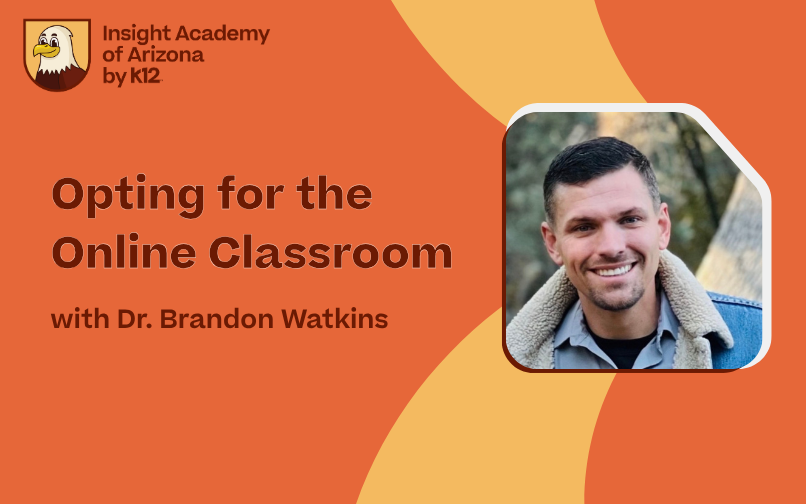
By Dr. Brandon Watkins, Dean of Students, Insight Academy of Arizona
After years of teaching in a traditional brick-and-mortar classroom, I never imagined I would make the shift to a virtual school and prefer teaching online. Like many educators, I worried online learning would feel impersonal and disconnected, but this couldn’t be further from my experience. After moving to Insight Academy of Arizona (ISAZ), and being named dean of students, I discovered online education can offer greater personalization, stronger student engagement, and more flexibility for both teachers and students.
One of the biggest shifts I experienced as an educator was moving away from a “teach to the middle” classroom model. In a traditional classroom, it can be difficult to pause instruction for one student without slowing down the entire class. Online teaching offers more opportunities to meet students where they are academically, socially, and emotionally. Students and teachers alike can revisit lessons through recorded instruction, give individualized support, and provide K12-approved online resources to help students learn content in a way that works for them.
For students, the flexibility of online education can be transformative. Some thrive because they can learn at their own pace in a quiet environment with fewer distractions. Others feel more comfortable participating in discussions online than they did in a physical classroom. I have seen students who once struggled to speak up in person become active, confident participants in virtual lessons.
This flexibility can be especially beneficial for neurodiverse learners. For students with attention challenges, one of the most effective strategies is reducing cognitive overload. Breaking lessons into shorter segments, using visual schedules, minimizing distractions, and balancing instruction with interactive activities can help students remain engaged without becoming overwhelmed.
Flexibility is often discussed as a benefit, but consistency and structure still play an important role in helping students succeed online. Together, these elements create an environment where students can build real-world skills that will benefit them long after graduation, including time management, independence, digital communication, and self-advocacy. Many students thrive with simple weekly routines that include goal setting at the beginning of the week, focused work blocks with regular screen breaks, and check-ins with teachers or parents for accountability. Teachers also find that the online environment allows more time for individualized feedback and student support, since they do not need to dedicate as much time to classroom management and rigid pacing often required in traditional classrooms.
Online teaching has also pushed us educators to become even more creative in how we engage students. Today’s virtual classrooms are far more interactive than many people realize. Teachers are increasingly embracing “edutainment,” blending education with engaging experiences that capture students’ attention and reinforce learning. For example, gamified quizzes, interactive storytelling, collaborative challenges, short-form educational videos, and project-based learning activities help transform passive screentime into active participation.
While technology plays a key role in online learning, personal connection is just as important. One misconception about online learning is that students and teachers never interact face-to-face. In reality, ISAZ places a strong emphasis on community-building and in-person connection throughout the school year. While students learn online daily, we also come together through events like Family Fun Day, field trips, school clubs, prom, graduation ceremonies, and community gatherings across Arizona.
I have attended Family Fun Day events where students, families, and teachers gathered for games, activities, and simple face-to-face connection. Seeing students introduce friends to their families, reconnect with classmates, and celebrate accomplishments together is a reminder that online schools are still deeply connected communities.
After transitioning from a brick-and-mortar classroom to an online setting, I have seen firsthand that meaningful learning is not defined by four walls. When online education combines creativity, structure and human connection, it can create an environment where both students and teachers truly thrive.
Back to BlogRelated Blog Posts

Our Students Get the Best of Both Worlds: Online Learning...
At Insight Academy of Arizona (ISAZ), we know that being an online middle and high school […]

From Rodeo Dreams to Academic Success: Adeline’s...
Adeline’s journey is an inspiring story of balancing a passion for rodeo with academic success. As […]

During National School Choice Week, Empower Your Child’s...
Today families have more educational choices than ever, and online learning is leading the way in […]